

Every December the same thing happens in San Fernando Valley kitchens. The light that made the room feel fine in July disappears before anyone starts cooking, the ceiling fixture throws your own shadow onto the counter, and the chopping gets done by feel.
People treat that as an electrical problem to solve later. It is mostly a cabinet problem, and later is the expensive time to notice.
Light on the counter comes from the cabinet above it
A single ceiling fixture puts you between the bulb and the work surface. The counter goes dark exactly where you are standing, and no amount of brighter bulb fixes the geometry.
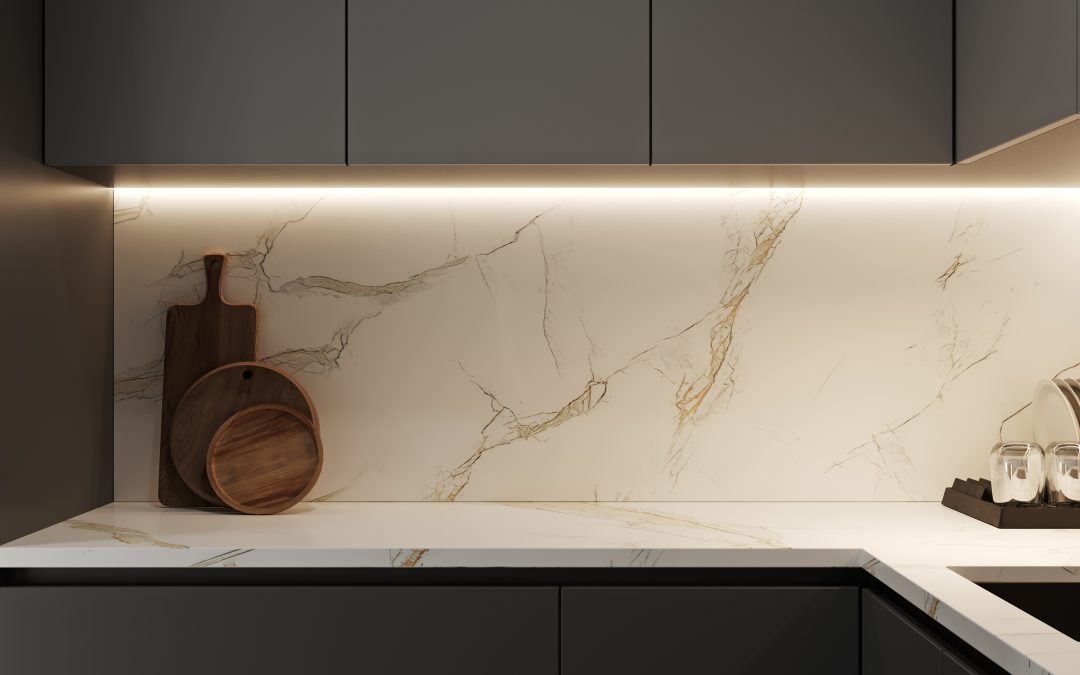
Task lighting mounted under the wall cabinets sits in front of you instead of behind, and it lands on the surface you are actually using. It is the difference between a kitchen that photographs well and one that works after sunset. Which means the run of wall cabinets, where they start and stop, and what happens over the sink and the range all decide where your usable light can go.
Those are layout questions, and they get settled on the drawing long before an electrician is involved.
→ plan the remodel before anything is ordered
Four decisions that settle it, all made before installation
- Where the wall cabinets end: an open stretch of wall with no cabinet above it has nowhere to mount task lighting, and that stretch is often the prep zone.
- The depth of the cabinet bottom: a recessed bottom rail hides a light strip, and a flush one leaves it visible from across the room.
- Upper cabinet height: mounting higher spreads light wider and softer, while lower puts more light on a smaller area.
- Whether any doors are glass: glass fronts turn a cabinet into a light source for the whole room, and that changes what the rest of the lighting has to do.
None of these are expensive choices. All of them are awkward to change after the boxes are hung.
The countertop changes the result more than the fixture does
A polished quartz slab bounces light back at you. A honed or matte surface absorbs it. The same strip of light over the same counter reads very differently depending on which you picked, and a dark glossy slab under a bright strip gives you glare instead of illumination.
Backsplash tile does the same thing in a smaller way. A gloss subway tile reflects light along the counter and makes the whole run feel brighter; a matte finish keeps it where it lands.
Decide the two together. Picking the slab in February and the lighting in April is how a kitchen ends up with glare over the prep zone.
→ countertop options for a Chatsworth kitchen
Cabinet finish does half the work for free
The darkest kitchens we see are not underlit. They are dark-finished rooms doing their best with an adequate amount of light, because deep espresso, charcoal and chocolate glazed doors absorb a great deal of what reaches them.
None of that argues against a dark kitchen. It argues for deciding the finish and the lighting plan in the same conversation, because a dark palette in a room with one north-facing window needs more light than the same cabinets in a bright corner kitchen out in Porter Ranch.
Lighter finishes buy you brightness you do not have to pay the electrician for. White and off-white doors, and the paler neutrals, reflect light back into the room and make a modest fixture go further.
→ see the kitchen finishes and door styles in stock
Why now is the right time to be looking at this
Household lighting has changed fast. The EIA found that 47% of US households used LED bulbs for most or all of their indoor lighting in 2020, up from 4% in 2015. LED strips are what made under-cabinet lighting practical in a cabinet run at all, because they are thin enough to disappear under a rail and cool enough to sit against wood.
That also means the fixtures you remember from an older kitchen are not the fixtures available now, and a lighting plan copied from a remodel done fifteen years ago is solving a problem that no longer exists.
→ kitchen remodeling in Chatsworth
Frequently Asked Questions
Q: Can under-cabinet lighting be added after a kitchen is finished?
A: It can, though the tidy options narrow once the cabinets are hung and the backsplash is tiled. Running power neatly is the part that gets harder.
Q: Should the light be warm or cool in a kitchen?
A: Match it to the rest of the room so the counter does not read as a different color than the table. Mixing warm ceiling light with cool task light is the most common complaint we hear after the fact.
Q: Does a glass cabinet door need its own light?
A: It works much better with one, and it needs the inside of the cabinet to be worth looking at. Plan the contents before you commit to the glass.
Lighting Belongs in the Drawing With the Cabinets
We design, supply and install kitchens out of our Chatsworth showroom, and the lighting plan belongs in the drawing alongside the cabinet run. Come in, open a few doors, and tell us where your kitchen goes dark.
Kitchen Emporium — 21417 Devonshire St, Chatsworth, CA 91311 · CA Lic #947147