

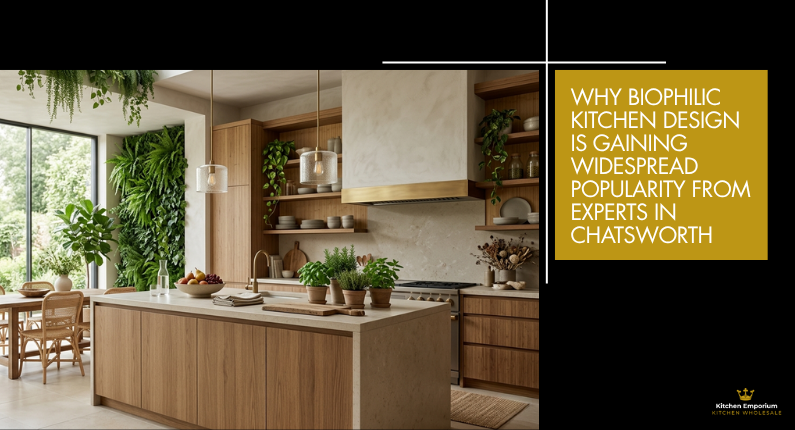
If you have spent any time browsing kitchen design inspiration recently, you may have noticed a striking shift in the aesthetic direction of contemporary kitchens. Natural materials, organic shapes, living greenery, and a deliberate connection to the outdoors have replaced the cold, minimalist interiors that dominated the previous decade. This movement has a name: biophilic design. And it is reshaping how homeowners across the Chatsworth and Los Angeles area think about their kitchens. At Kitchen Emporium in Chatsworth, California, our design specialists have been incorporating biophilic elements into residential kitchen renovations throughout the San Fernando Valley, and we have seen firsthand why this design philosophy resonates so deeply with homeowners.
What Is Biophilic Kitchen Design?
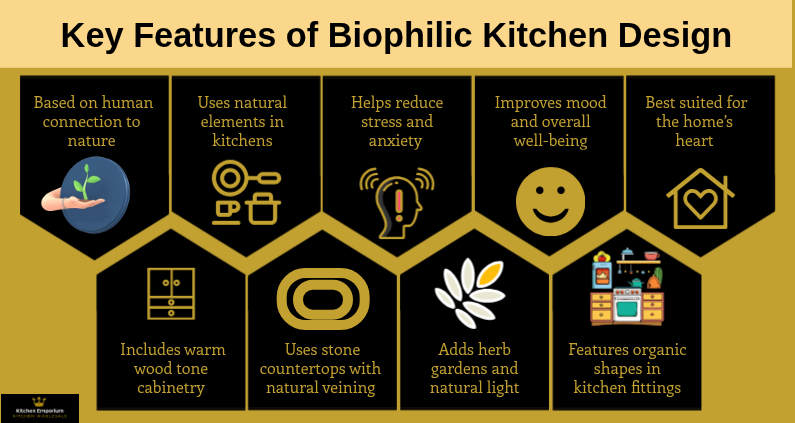
Biophilic design is grounded in a simple but profound insight: human beings have an innate connection to the natural world, and living in environments that incorporate natural elements improves well-being, reduces stress, and enhances mood. The kitchen, as the heart of the home and the room where families spend significant time together, is one of the most impactful spaces to apply these principles.
In a biophilic kitchen, this might mean installing custom cabinetry in warm wood tones that reference the natural grain and warmth of a forest, incorporating stone countertops with visible veining that mimics natural geological formations, adding live herb gardens as functional and visual accents, maximizing natural light through enlarged windows or skylights, and using organic shapes in cabinet hardware, sinks, and island profiles rather than purely rectilinear forms.
Key Elements of Biophilic Kitchen Design
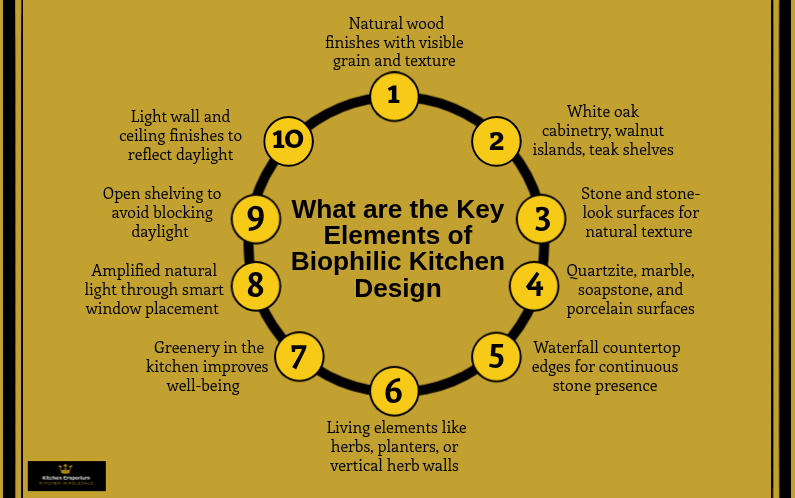
Natural wood is the cornerstone of most biophilic kitchen remodels. From white oak cabinetry with visible grain to walnut kitchen islands and teak floating shelves, wood brings an irreplaceable warmth and organic quality to the space. Recent years have seen a return to natural wood finishes that celebrate rather than conceal the wood’s grain, texture, and natural variation.
Stone and stone-look surfaces provide another critical element of natural texture. Quartzite, marble, soapstone, and high-quality porcelain that faithfully replicates natural stone all contribute to the organic feeling of a biophilic kitchen. Waterfall countertop edges that extend the stone surface continuously from countertop to floor emphasize the natural material’s presence in the space.
Living elements — whether potted herbs on the windowsill, a built-in planter along the counter edge, or a vertical herb wall — introduce actual life and greenery into the kitchen. Studies consistently show that the presence of living plants in interior spaces reduces cortisol levels and improves subjective well-being.
Natural light is amplified through thoughtful window placement, open shelving that avoids blocking light penetration, and light finishes on walls and ceilings that reflect and distribute daylight throughout the space.
Why Chatsworth Homeowners Are Embracing This Trend
In the greater Los Angeles area, where the outdoor lifestyle is a central part of daily life, biophilic kitchen design feels like a natural extension of the local culture. Homeowners want their interiors to reflect the warmth, openness, and organic beauty of the Southern California landscape. Kitchen Emporium’s designers work closely with each client to identify the specific natural materials, textures, and elements that resonate most with their personal aesthetic and lifestyle.
Address: 21417 Devonshire St, Chatsworth, CA 91311
Phone: (818) 349-7500
Website: kitchenemp.net
Frequently Asked Questions
Q: Is biophilic kitchen design more expensive than conventional kitchen renovation?
A: Natural materials like solid wood cabinetry and natural stone countertops can carry a premium compared to synthetic alternatives, but the range of price points is broad. Our Kitchen Emporium designers can create a biophilic aesthetic at various budget levels by thoughtfully selecting where to invest in natural materials and where to use high-quality alternatives.
Q: How do I maintain natural wood cabinets in a kitchen environment?
A: Quality wood cabinetry designed for kitchen use is finished with durable lacquers or catalyzed topcoats that protect the wood from moisture and heat. Regular cleaning with appropriate wood-safe products and periodic refinishing when needed keeps wood cabinets looking beautiful for decades.
Q: Can biophilic design be incorporated into a small kitchen?
A: Absolutely. Even in compact kitchens, natural materials, improved natural lighting, and live plants can create a meaningful connection to the natural world. Our designers specialize in maximizing the impact of design choices in spaces of all sizes.
Q: Does Kitchen Emporium handle full kitchen remodels or just cabinets?
A: Kitchen Emporium provides comprehensive kitchen remodeling services, including cabinetry, countertops, backsplashes, and design consultation. We guide our clients through the entire renovation process from initial design through installation.